Flood Damage Cleanup in Marietta, GA
24/7 Flood Water Removal, Disinfection, and Drying. On Site in 60 Minutes.
Flood water is not clean water. It carries bacteria and contaminants, spreads through your home fast, and can start growing mold within a day in Marietta's humidity. We remove the water, disinfect the area, and dry your property completely.
What to Do After Your Home Floods
Flood water can carry sewage, bacteria, and chemicals, so your safety comes first. Follow these steps and stay out of the water when you can.
- Avoid contact with the flood water. Treat it as contaminated, even if it looks clear.
- Turn off power to the flooded area at the breaker, only if you can reach it without standing in water.
- Do not use appliances, outlets, or electronics that the water has touched.
- Get children and pets away from the flooded area and keep them out.
- Take photos and video of everything before you move or remove anything.
- Do not throw away damaged items yet — your insurer needs to see them first.
- Call us. Contaminated flood water is not a safe do-it-yourself cleanup.
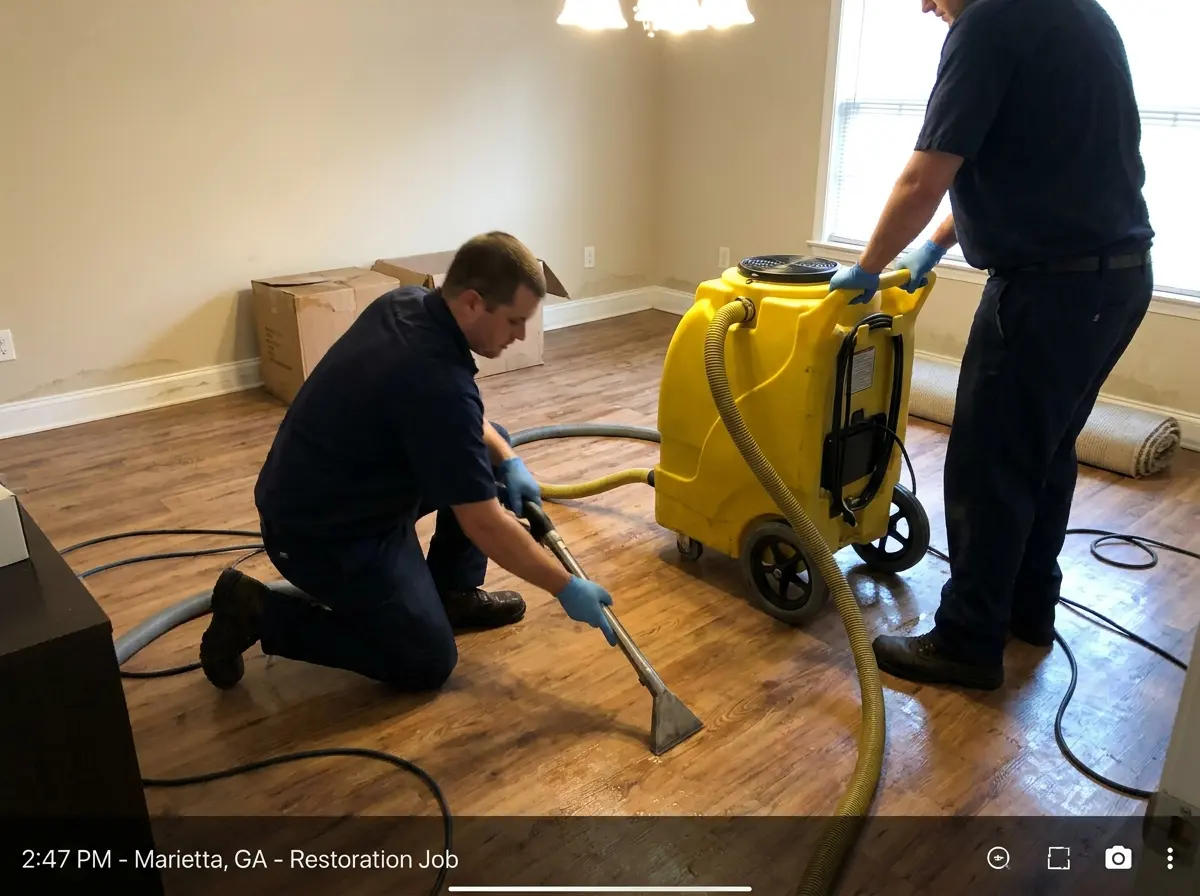
Marietta's Local Flood Cleanup Team
Marietta Restoration Experts is a locally owned flood damage cleanup company serving Marietta and Cobb County since 2013. We handle the full job, from flood water extraction and debris removal to disinfection, structural drying, and repairs. Whether the flooding came from a summer storm, a swollen creek, a sewer backup, or groundwater pushing through your foundation, our IICRC-certified crew removes the water safely, treats the contamination, and restores your home.
Flood Damage Is Not the Same as Water Damage
These two terms get used like they mean the same thing, but they are different — and the difference affects both how the cleanup is done and whether your insurance pays. Flood damage comes from outside water entering your home, such as storm runoff, a rising creek, or groundwater. This water is almost always contaminated. Water damage usually comes from inside your home, such as a burst pipe or an appliance leak, and that water often starts clean.
Flood water is treated as Category 3 black water, which carries bacteria and needs disinfection and safe material removal.
Flood cleanup requires protective gear, disinfection, and removal of porous materials the water touched.
Standard homeowner policies usually cover internal water damage but often exclude external flooding. More on that below.
What Causes Flooding in Marietta Homes
After more than ten years working here, these are the causes we see most.
Metro Atlanta gets more than 50 inches of rain a year. Marietta's red clay soil does not absorb it quickly, so heavy storms send water pooling against foundations and into basements and crawl spaces.
When a storm drops two to four inches of rain in an hour, low-lying neighborhoods near Noonday Creek can flood within minutes. Water rises fast, overwhelms yard drainage, and enters homes through doors and basement windows.
During heavy rainfall, Cobb County's sewer system can reach capacity and push water back through floor drains and basement drains. This is Category 3 black water and needs professional sewage cleanup.
Marietta's clay soil expands when wet and shrinks when dry. Over years, that movement opens small cracks in foundation walls. Water seeps through those cracks during heavy rain, flooding basements slowly but steadily.
Many older Marietta homes rely on a sump pump to keep groundwater out of the basement. When the pump fails or loses power during a storm, water rises fast, often at the exact moment it is needed most.
High winds damage shingles and flashing, letting rain into attics and ceilings. See our storm damage restoration and roof leak water damage services.
Will Your Insurance Cover Flood Damage in Marietta?
According to FEMA, most standard homeowner insurance policies do not cover flood damage from outside sources like storms and rising water. Flooding usually requires a separate flood insurance policy through the National Flood Insurance Program or a private insurer. However, water damage from a sudden internal source, like a burst pipe or appliance failure, usually is covered under a standard homeowner policy.
Storm runoff, rising creek, or groundwater — usually needs separate flood insurance to be covered.
Burst pipe or appliance leak — usually covered by standard homeowner insurance.
We identify and document the true source and category of the water, record photos and moisture readings from day one, and work with both homeowner and flood insurance carriers.
How We Clean Up Flood Damage
Flood cleanup follows a different path than a clean-water job because the water is contaminated. For the full detail, see our restoration process.
We assess electrical hazards, structural risk, and the water category before anyone enters.
Submersible pumps and truck-mounted extractors remove standing water fast, even several feet of it.
Flood water leaves mud, silt, and debris behind. We remove it all before drying begins.
Porous materials soaked in contaminated water are removed and disposed of safely. Every item is documented for your insurance claim.
We treat all affected surfaces with EPA-approved antimicrobial products to kill bacteria and prevent mold growth.
Commercial air movers and dehumidifiers dry the structure fully, checked daily. Once dry, we rebuild what was damaged so your home returns to how it was before the flood.
What Can Be Saved and What Has to Go After a Flood
With flood water, the deciding factor is not just how wet something got, but whether it can be fully cleaned and disinfected.
Usually Salvageable
- Hard, non-porous surfaces — tile, sealed concrete, glass, and metal
- Solid wood furniture, if treated quickly
- Dishes, cookware, and hard plastics after disinfection
- Some structural framing, if it dries to safe levels in time
Usually Has to Be Removed
- Carpet and carpet padding that contacted flood water
- Drywall below the water line
- Saturated insulation
- Upholstered furniture and mattresses soaked in contaminated water
- Particleboard and pressed-wood furniture
Why Flood Water Is a Health Hazard
Flood water is not just dirty. It can carry sewage, bacteria, chemicals from the ground, and debris. Standing in it, breathing the damp air, or trying to clean it yourself puts your health at risk.
- Bacteria and sewage. Flood water often mixes with sewer overflow, carrying pathogens that cause illness.
- Mold within a day. The EPA says mold can begin growing within 24 to 48 hours, and Marietta's humidity speeds that up.
- Materials that cannot be cleaned. Porous items soaked in flood water hold contamination even after they look dry, which is why they are removed.
This is why flood cleanup is not a safe do-it-yourself job. Our crew uses protective gear, professional disinfection, and safe disposal to protect your family and your home.
Call for a Free On-Site Flood Assessment
Call (770) 796-7192 — Immediate DispatchHow Much Does Flood Damage Cleanup Cost in Marietta?
Flood damage cleanup in Marietta usually costs $2,500 to $10,000 for most homes, and more for large or heavily contaminated jobs. Flood cleanup often costs more than a clean-water job because contaminated water requires safe material removal, disinfection, and disposal.
What changes the price
- Contamination level. Category 3 flood water needs disinfection and safe disposal, which adds cost.
- Material removal. Carpet, drywall, and insulation soaked in flood water must be removed and replaced.
- Square footage and water depth. More area and deeper water mean more extraction, drying, and rebuild.
Flood Damage Cleanup FAQs
Flood Damage Cleanup Across Marietta and Cobb County
We respond to flood emergencies across Marietta and every town around it.
- East Cobb flood cleanup
- Kennesaw flood cleanup
- Smyrna flood cleanup
- Acworth flood cleanup
- Powder Springs flood cleanup
We serve neighborhoods including Indian Hills, Whitlock Heights, East Park, Chestnut Creek, Windsor Oaks, Chimney Springs, Somerset, and communities across Marietta and Cobb County.
ZIP codes covered: 30006, 30007, 30008, 30060, 30062, 30064, 30066, 30067, 30068, and 30090.
Call Now. We Remove Flood Water Safely and Fast.
Flood water spreads and contaminates fast, and mold can start within a day. Our local crew answers live, removes the water safely, and dries your home the right way.
(770) 796-7192 | Available 24/7, including weekends and holidays