Sewage Backup Cleanup in Marietta, GA
24/7 Biohazard Response. Safe Removal, Full Disinfection, On Site in 60 Minutes.
A sewage backup is not just a mess. It is a health hazard. The water carries bacteria and viruses that can make your family seriously ill, and it gets worse the longer it sits. We remove the sewage safely, disinfect your home down to the structure, and restore it to a clean, safe condition. Please do not touch it. Call us and stay clear.
Sewage Backup? Do Not Touch It. Here Is What to Do.
Sewage is contaminated with bacteria and viruses, so your safety comes before your property. The right move is to stay away from it and let a trained crew handle it. Here is what to do and, just as important, what not to do.
Do this
- Keep everyone away from the area, especially children and pets.
- Turn off power to the affected area at the breaker, only if you can reach it without stepping in the water.
- Stop using water in the house. Do not flush toilets or run sinks, which can add to the backup.
- Open a window near the area if you can do it without walking through the sewage.
- Take photos from a safe distance for your insurance claim.
- Call us right away.
Do not do this
- Do not touch the sewage or any surface it has reached.
- Do not try to clean it up yourself, and do not use a shop vac.
- Do not run your HVAC, air conditioning, or fans. Moving the air spreads the contamination through your ducts and into rooms nobody entered.
- Do not just pour bleach on it and hope it is enough. Sewage soaks into materials where surface bleach cannot reach.
Warning Signs You Have a Sewer Backup, Not Just a Clog
One slow drain is usually just a clog. A sewer backup shows itself in more than one place at once, because the blockage is deeper in the line. Watch for these signs.
- More than one drain backing up. If your toilet, tub, and sink all act up together, the problem is in the main line, not one fixture.
- Gurgling toilets. Air trapped by a blockage makes toilets bubble or gurgle, especially when you run a sink or washer.
- A sewer smell from drains. A foul, rotten smell coming up from drains or a floor drain is a warning sign of a backing-up line.
- Slow drains throughout the house. When every drain is slow at the same time, the blockage is shared, meaning the main line.
- A lush green patch in the yard. A cracked sewer line leaks nutrients into the soil, so one patch of lawn grows greener and faster than the rest.
Marietta's Local Sewage and Biohazard Cleanup Team
Marietta Restoration Experts is a locally owned sewage cleanup company serving Marietta and Cobb County since 2013. Sewage backup is Category 3 black water, the most contaminated class of water damage, and we are trained and equipped to handle it safely. We remove the sewage and solid waste, dispose of contaminated materials properly, disinfect every affected surface, and dry and restore your home. One local crew handles the whole job, from the first safe extraction through the final repair.
Call for Emergency Sewage Cleanup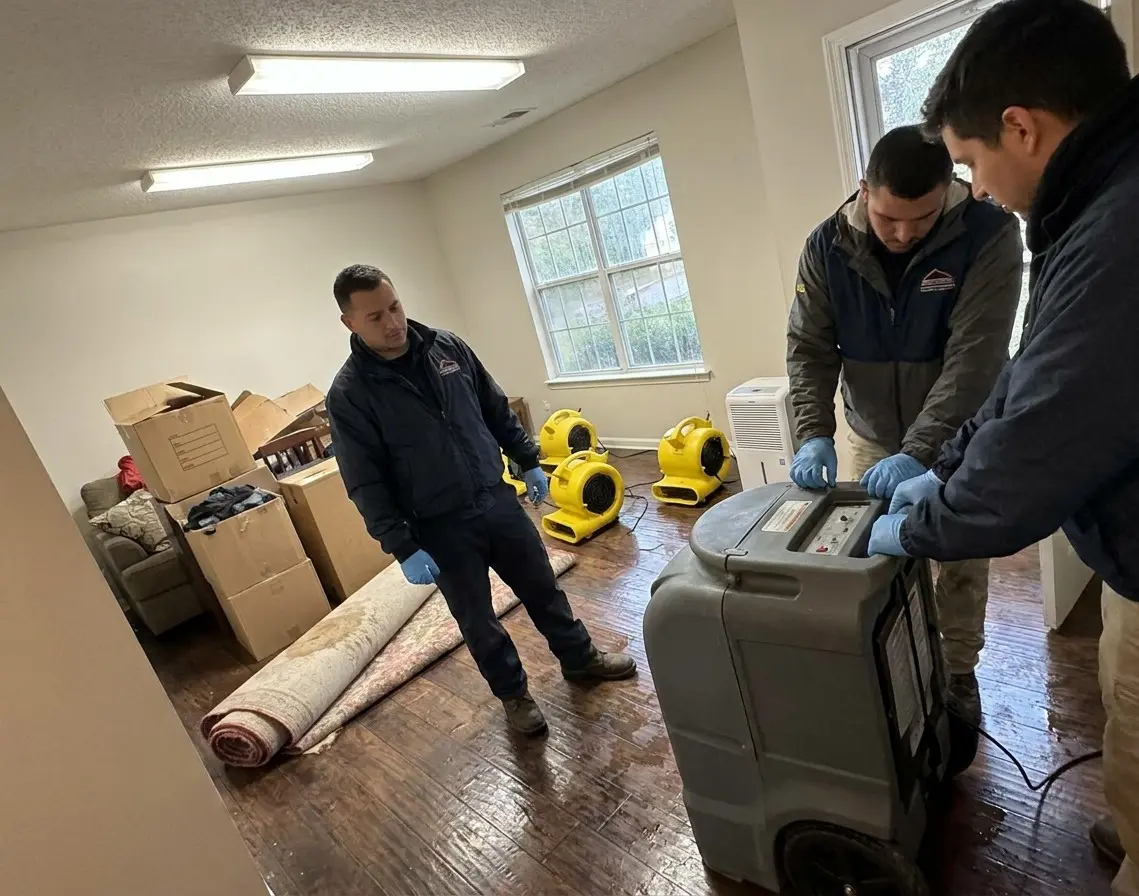
Why Sewage Backup Is a Serious Health Hazard
Sewage is classified as Category 3 black water, the most dangerous type of water damage. It carries human waste, and with it a mix of bacteria, viruses, and parasites that can cause serious illness. This is why sewage cleanup is treated as a biohazard job, not an ordinary water cleanup.
The CDC warns that sewage can carry pathogens like E. coli, Salmonella, Hepatitis A, and norovirus, which cause stomach illness, infections, and worse.
Sewage releases gases such as hydrogen sulfide and methane, which are harmful to breathe in an enclosed space.
Disturbing sewage sends tiny droplets into the air that carry the same pathogens into your lungs and onto surfaces throughout your home.
The EPA says mold can start within 24 to 48 hours, and the moisture and nutrients in sewage speed that up.
What Causes Sewage Backups in Marietta Homes
A sewage backup happens when wastewater cannot flow out through the sewer line, so it comes back up through the lowest drains in your home. After more than ten years working in Cobb County, these are the causes we see most.
Tree roots are drawn to the water inside sewer pipes and grow in through small cracks, then expand until they block the line. Marietta's mature oaks, maples, and magnolias, combined with old clay pipes near Indian Hills and the Marietta Square, make this the top cause.
Grease hardens in the line, and "flushable" wipes, paper towels, and hygiene products do not break down. Over time they build up and block the main line, sending sewage back through several drains at once.
Many pre-1990 Marietta homes still have clay or cast iron sewer pipes. These materials corrode, crack, and collapse over decades, which blocks flow and lets sewage back up.
Marietta's red clay expands when wet and shrinks when dry. Over years, that movement cracks and misaligns underground sewer lines, the same soil behavior that causes basement flooding and foundation problems.
During heavy storms, the public sewer system can reach capacity and push wastewater back into homes through floor drains. Cobb County publicly reports sanitary sewer overflows into Noonday Creek and Blackjack Creek, showing how often this happens during Marietta's heavy rains.
A sump pump failure during a storm lets water and sewage rise with nowhere to go. In homes on septic, a tank overdue for pumping or overwhelmed by rain can back up into the house.
Is a Sewer Backup Your Responsibility or the City's?
This is the question most homeowners do not know the answer to, and it decides who pays. The answer comes down to where the blockage is.
Your lateral (your responsibility)
You own the sewer pipe that runs from your house to the main line under the street, called the lateral. If the blockage is in that pipe, from tree roots, a clog, or a cracked line, it is your responsibility to clean up and repair.
The city main (the county's responsibility)
Cobb County owns the main line under the street. If the backup came from a blockage or overflow in that main, the county may be responsible and you may be able to file a claim for damages.
Does Insurance Cover Sewage Backup in Marietta?
Here is the honest answer, and it catches many homeowners off guard. A standard homeowner policy usually does not cover sewage or sewer backup on its own. Coverage normally requires a separate add-on, often called a water backup or sewer backup endorsement, that you have to buy ahead of time. It typically costs $40 to $100 a year. If you added it before the backup, you likely have coverage. If you did not, you may not.
This is different from a burst pipe, which is usually covered, and different from a flood, which needs flood insurance. Sewage backup sits in its own category.
- We document the source, the contamination, and the damage from our first visit.
- We tell you honestly what to check on your policy, including whether you have a backup endorsement.
- We work with your carrier and adjuster if you have coverage.
How We Clean Up a Sewage Backup Safely
Sewage cleanup follows strict biohazard steps to protect your family and prevent the contamination from spreading. Here is how we work. For the full detail, see our restoration process.
We seal off the area, put on protective gear, and check for gas and electrical hazards before we start.
We remove the standing sewage and solid waste with commercial equipment made for the job.
Porous materials the sewage touched are removed and disposed of safely, following proper handling rules.
We clean every hard surface and HEPA vacuum to capture fine contamination.
We treat all affected surfaces with EPA-approved antimicrobial products to kill bacteria and viruses.
We dry the structure fully, then confirm the area is clean and safe before any repairs.
What Has to Be Removed After a Sewage Backup
With sewage, the deciding factor is whether something can be fully cleaned and disinfected. Porous materials soak up the contamination, and the smell, in a way that cannot be safely reversed.
Usually has to be removed
- Carpet and carpet padding that contacted sewage
- Drywall and insulation below the contamination line
- Upholstered furniture and mattresses
- Particleboard and pressed-wood furniture
- Food, dishes, and containers that cannot be sanitized
Usually can be saved
- Tile, sealed concrete, glass, and metal — after disinfection
- Solid wood furniture, if treated quickly
How Much Does Sewage Backup Cleanup Cost in Marietta?
Sewage backup cleanup in Marietta usually costs $2,000 to $10,000 for most homes, and more for severe or widespread contamination. It costs more than a clean-water job because of the biohazard protocols, safe disposal, disinfection, and material removal involved. The final price depends on how much sewage there was, how far it spread, and how much material has to be replaced.
A contained bathroom backup costs far less than sewage across a finished basement.
Carpet, drywall, and insulation that contacted sewage must be removed and replaced.
More sewage means more disinfection, disposal, and drying time, which affects the total.
Sewage Backup in Marietta?
Call (770) 796-7192 — Trained Biohazard Crew, 24/7Sewage Backup Cleanup FAQs
Sewage Backup Cleanup Across Marietta and Cobb County
We respond to sewage emergencies across Marietta and every town around it. Wherever you are in Cobb County, our nearest crew is close by.
- East Cobb sewage cleanup
- Kennesaw sewage cleanup
- Smyrna sewage cleanup
- Acworth sewage cleanup
- Powder Springs sewage cleanup
We serve neighborhoods including Indian Hills, Whitlock Heights, East Park, Chestnut Creek, Windsor Oaks, Chimney Springs, Somerset, and communities across Marietta and Cobb County.
ZIP codes covered: 30006, 30007, 30008, 30060, 30062, 30064, 30066, 30067, 30068, and 30090.
Stay Clear and Call Now.
Sewage is a health hazard that gets worse and spreads the longer it sits. Do not try to handle it yourself. Our trained local crew answers live, removes the sewage safely, and disinfects your home so it is clean and safe for your family. Call now.
(770) 796-7192 | Available 24/7, including weekends and holidays